

Craftsmanship in Detail
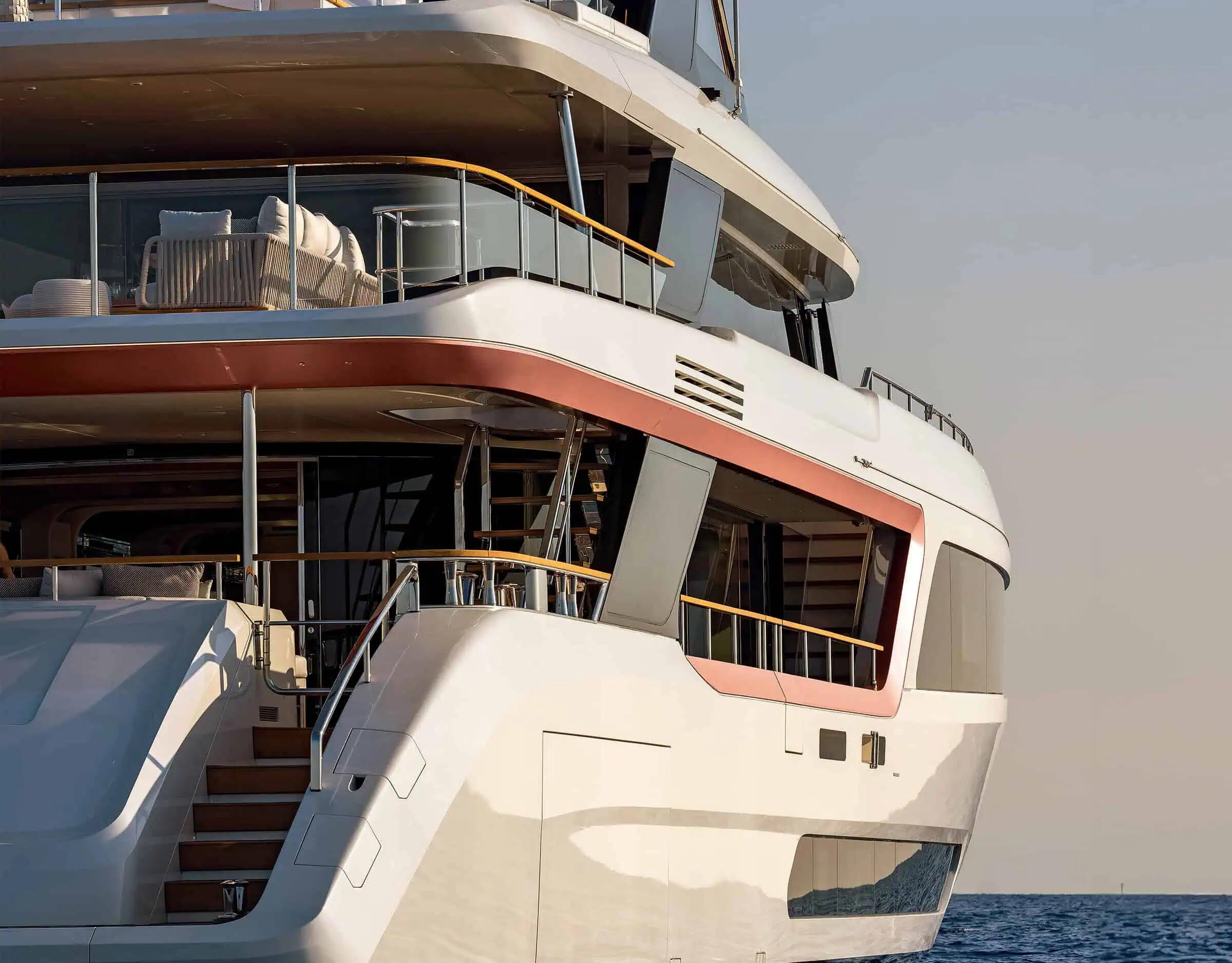
Craftsmanship on a yacht is easy to talk about and hard to point at. The visible part — joinery, stitching, the way a hatch closes — is real, but it is downstream of decisions made long before anyone chose a veneer. The interesting part happens in the mould.
The lightest part is the one you never build
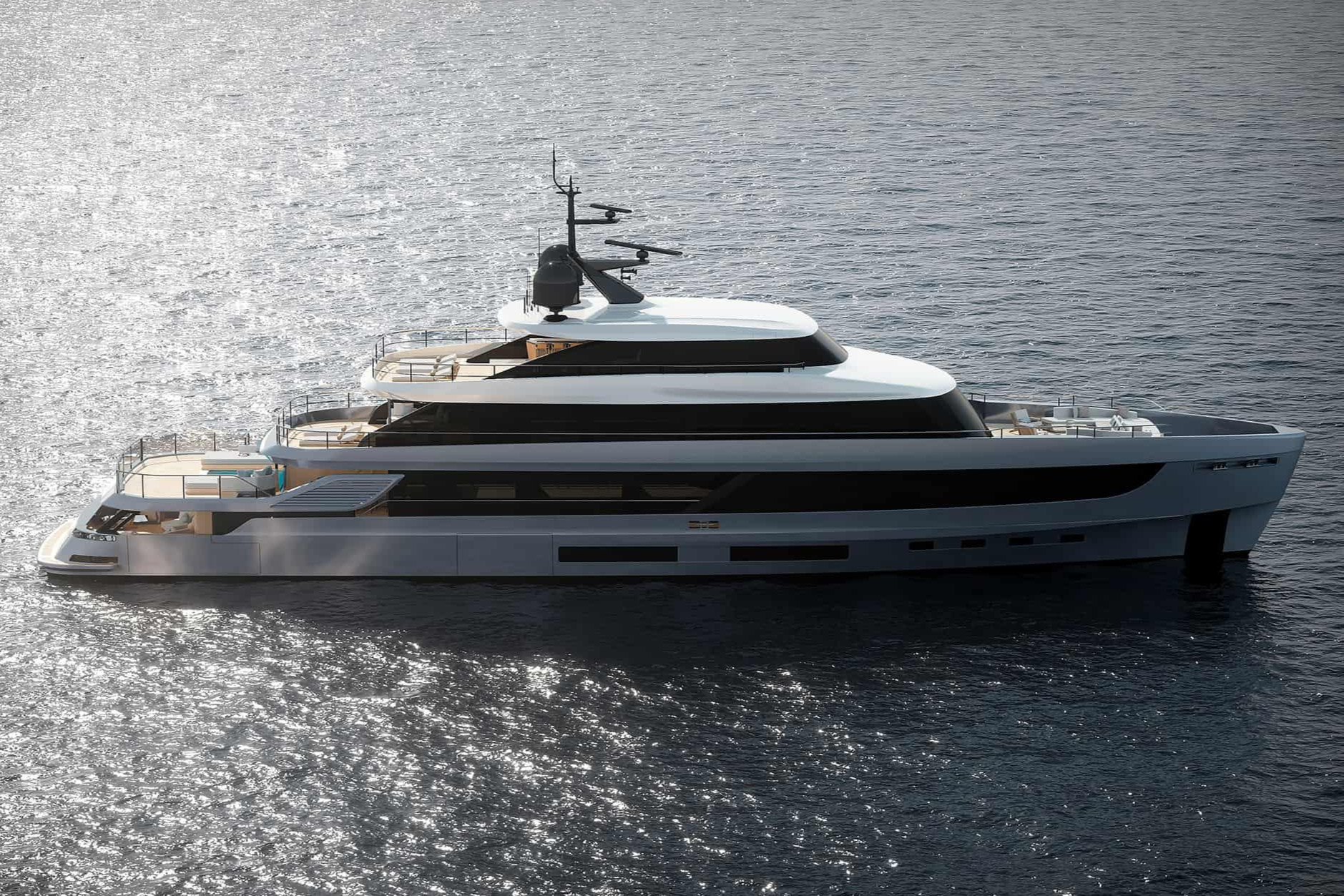
The clearest example in the Azimut range is the Grande Trideck: 38.22 metres, the yard’s first triple-deck yacht, with exteriors by Alberto Mancini, interiors by M2Atelier and naval architecture by P.L. Ausonio with Azimut’s own R&D department.
Its superstructure is built in carbon fibre and GRP rather than GRP alone. That makes it around 30 % lighter — roughly six tonnes saved, high up, where weight costs the most. On a Displacement-to-Planing hull driven by two MTU engines, that saving is what buys 24 knots at the top end and a comfortable 21 knots cruising on a boat carrying five or six guest cabins and quarters for four crew.
Carbon as an efficiency decision
The same logic runs through the Seadeck series, where up to 40 % carbon in the hull, deck and superstructure combines with a new hull form and a hybrid driveline to cut CO₂ emissions by up to 40 % against a comparable conventional planing yacht. Carbon here is not a luxury material. It is the reason the rest of the package works — as we set out in hybrid power comes of age at sea.
Infusion, and why the hull matters
At the other end of the range, the Saxdor 460 GTS is built in vacuum-infused GRP on a twin-stepped 20.5° V. Vacuum infusion draws resin through dry laminate under vacuum rather than rolling it in by hand: a consistent resin-to-fibre ratio, less excess resin, less weight and a repeatable part every time.
That consistency is what lets a 47-foot boat carry triple outboards to fifty knots and still ride predictably. Craftsmanship, on a production hull, largely means the two hundredth one is as good as the first.

Steel, aluminium and full custom
Benetti, part of the Azimut|Benetti Group since 1985, works at the other extreme: full-custom displacement and semi-displacement yachts in steel and aluminium, at sizes beyond ninety metres, alongside a composite line. At that scale nothing is a catalogue item — every yacht is engineered around one owner’s brief, which is a very different craft from building the same boat beautifully two hundred times.
Both disciplines are real. They are just answers to different questions.
The details you notice in year three
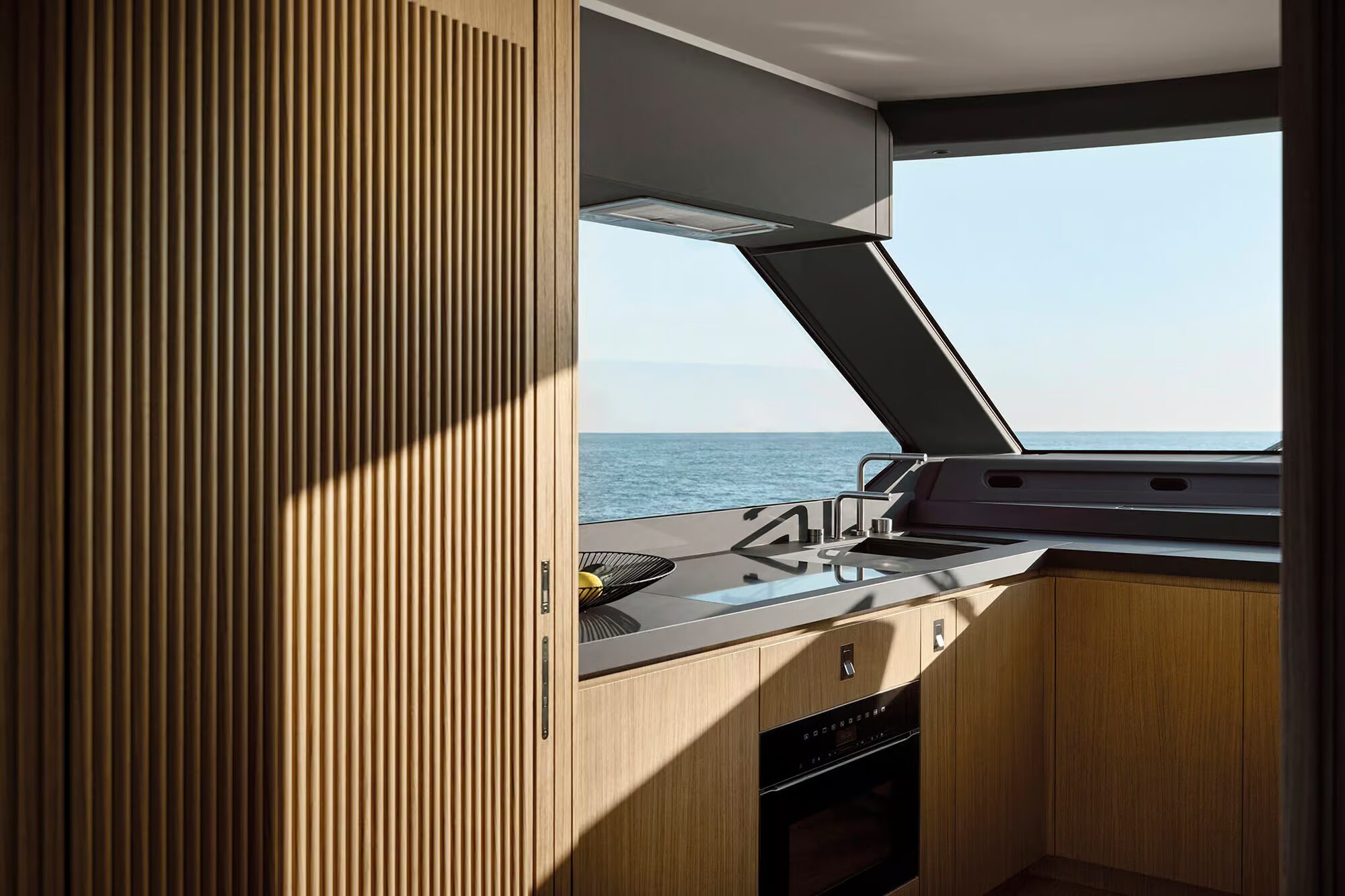
Once the structural decisions are made, the visible craft is what you live with. The things that separate a well-built yacht in its third tropical season are rarely the ones that sell it in the first week:
- Joinery that still closes squarely after three years of humidity cycling.
- Hardware and fastenings specified for salt air rather than for the photograph.
- Hatch and door seals that are still dry, and drains that still run where they were meant to.
- Teak caulking that has not lifted, and a deck that was bedded properly the first time.
- Service access — whether a filter can be changed without dismantling the furniture.
See the difference in person
Photographs flatten all of this. Come and open the lockers. We arrange viewings across Colombia and Panama — write to ventas@elite-yachts.com.

